
Your Impact
Build Faith, Inspire Hope, and Ignite Change
When you support Catholic Extension Society, you are strengthening faith communities in America’s poorest places by providing the funding and resources needed for the Church to thrive. Together, we enable these isolated and/or financially under-resourced Catholic dioceses to create a better future for themselves, their families, and our whole country.
You are making an impact in the following ways:
Education and Support
A critical need for the church is the availability of trained, competent, and faithful ministers. With your help, Catholic Extension Society supports efforts to develop well-trained diocesan and parish leaders in sufficient numbers to sustain excellence in church life.
Listen to sisters participating in the U.S.-Latin American Sisters Exchange Program share reflections on some of the unique ways they serve and learn how they are transforming lives in the Latino immigrant communities they help:
Youth Ministries
The vibrancy and viability of a Catholic community largely depend on its ability to share the faith with the next generation. With your help, Catholic Extension Society funds the pastoral and faith formation needs of young Catholics as identified by their parish leadership. Additionally, Catholic Extension Society supports initiatives that develop new leaders in the church among young Catholics.
See how young Latinx Catholics are embracing the faith, and meet a young Catholic woman leading the way in Tennessee:
Church Construction and Renovation
Catholic Extension Society funds the construction, expansion, or renovation of churches and facilities that enable the dynamic practice of faith and promote the experience of church community.
Hear from Dr. Veronica Rayas about how Catholic Extension Society donors enabled the Diocese of El Paso to build an arts and cultural center to enrich the lives of middle school youth:
Become a Catholic Extension Society Insider
Do you want to receive special email updates directly from The Catholic Extension Society?
Get direct and instant access to a member of our team, who will share information about your impact, project outcomes and stories from the field.
More Stories of Impact
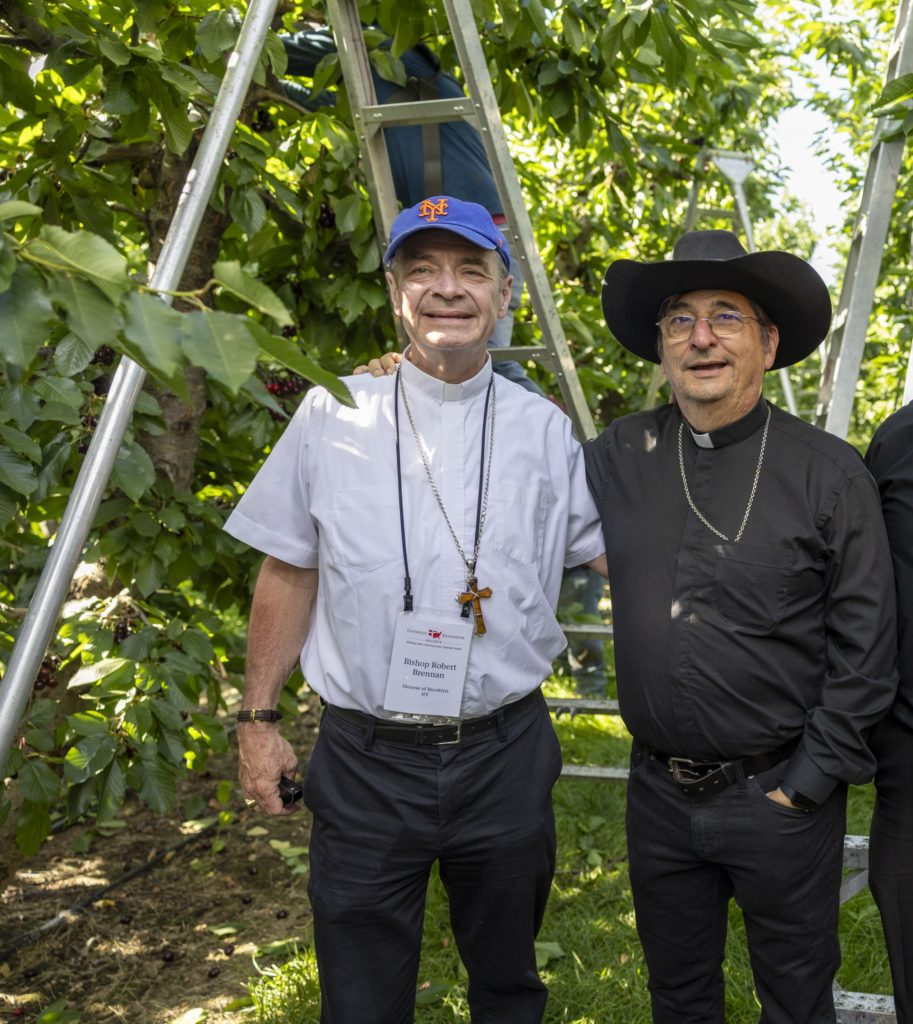
Why Bishop Brennan of Brooklyn and His Priests Visited Farmlands
Bishop Robert Brennan has his hands full. He leads the Diocese of Brooklyn and its 1.5 million Catholics and 185 parishes. But he accepted our invitation to visit farmlands and orchards in Yakima, Washington, last summer, along with nine of his priests.
Read more of his story
The Pastor Immersion Program supported by Catholic Extension Society has existed for eight years, and Bishop Brennan was the first diocesan bishop to attend. He is pictured below with the Bishop Joseph Tyson of Yakima, who shared with him the realities of shepherding an Extension diocese.
Funded by a foundation grant, an immersion trip gathers a small group of pastors to spend two to three days together visiting Catholic communities that are rarely visited and scarcely known to the outside world. These trips to economically poor areas that are supported by Catholic Extension Society are meant to expand priests’ pastoral horizons and help them rediscover why they fell in love with ministry in the first place.
Bishop Brennan and his priests visited an agricultural community in Washington State, where they met with farmworkers and witnessed firsthand the Church’s amazing pastoral care of those that labor in the fields and packing houses.
Time well spent
In his podcast, “Big City Catholics,” recorded during the trip, the bishop said, “We get to see life as it’s lived here and how the local Church is a Church that meets people exactly where they are.”
He continued, “The Church goes out to the fields, goes out to the camps where people are living, walks among the people and it’s bringing the Church. It’s really about bringing the Church in all its fullness. That’s the point of the Catholic Extension Society.”
Bishops of major urban dioceses are doers. They are always in motion, trying to understand and respond to the million and one things on their plate. Bishop Brennan is that dedicated shepherd. But he had to slow down and listen.
Speaking about the workers he met along the way on various jobsites and fruit packinghouses, he said, “People wanted to share the journey of their lives with us, and they wanted us to learn something. And as you go through this with the Catholic Extension Society, they don’t want you to do anything. You’re not there to help. You’re there to learn. That’s a big insight!”
An immersion trip, therefore, is not a service trip. It is a learning trip in which participating pastors place themselves in the classroom of the People of God. Bishop Brennan was an apt and humble participant in their school.
He noted that he encountered a different side of poverty with the seasonal farmworkers he met, along with the challenge of being constantly uprooted from one place and moving to the next.
He said, “We saw real poverty, but we see real poverty right here in Brooklyn and Queens as well. It’s a different kind. We see the urban reality here. It was interesting to learn the rural and the seasonal, the migrant. You know, people go from up along the coast, along the Pacific Coast as the seasons turn, to harvest the fruits along the way, to work hard at it.”
His priests gained just as much from this experience. “This is a great thing for us to ensure unity,” Father Juan Luxama said. “We are working together and we have one mission, and to set the example for other dioceses and to partner with the Catholic Extension Society is incredible. I never thought I would see that a bishop would take three days of his busy schedule to travel with priests from his diocese and to be part of the journey of the people.”
Bishop Brennan reflected that an immersion trip is like a retreat. “It affects our prayer life and how we hear the prayers at Mass.” Seeing people harvest fruits helped him more deeply understand the prayer over the gifts at the offertory: “Blessed are you, Lord God of all creation, for through your goodness we have received the wine we offer you: fruit of the vine and work of human hands. It will become for us our spiritual drink.”
Bishop Brennan said that he will never pray these prayers again without thinking of the orchards and the laborers who bring fruit to our tables. This is what an immersion trip does. It helps pastors walk in solidarity with those on the margins, sharing their burdens and joys and hearing the Gospel in new and powerful ways. This is an immersion trip’s true harvest.
How blessed are the priests and people from the Diocese of Brooklyn to have a bishop who knows his way around both a cherry orchard and God’s abundant orchard. “I mean, that’s really what was so remarkable about this experience for me, is that this is the Church being the Church … this was really about celebrating the sacraments, being present to people, praying with people. To me, that was just so moving,” Bishop Brennan said.
Pastors nationwide renew their hearts
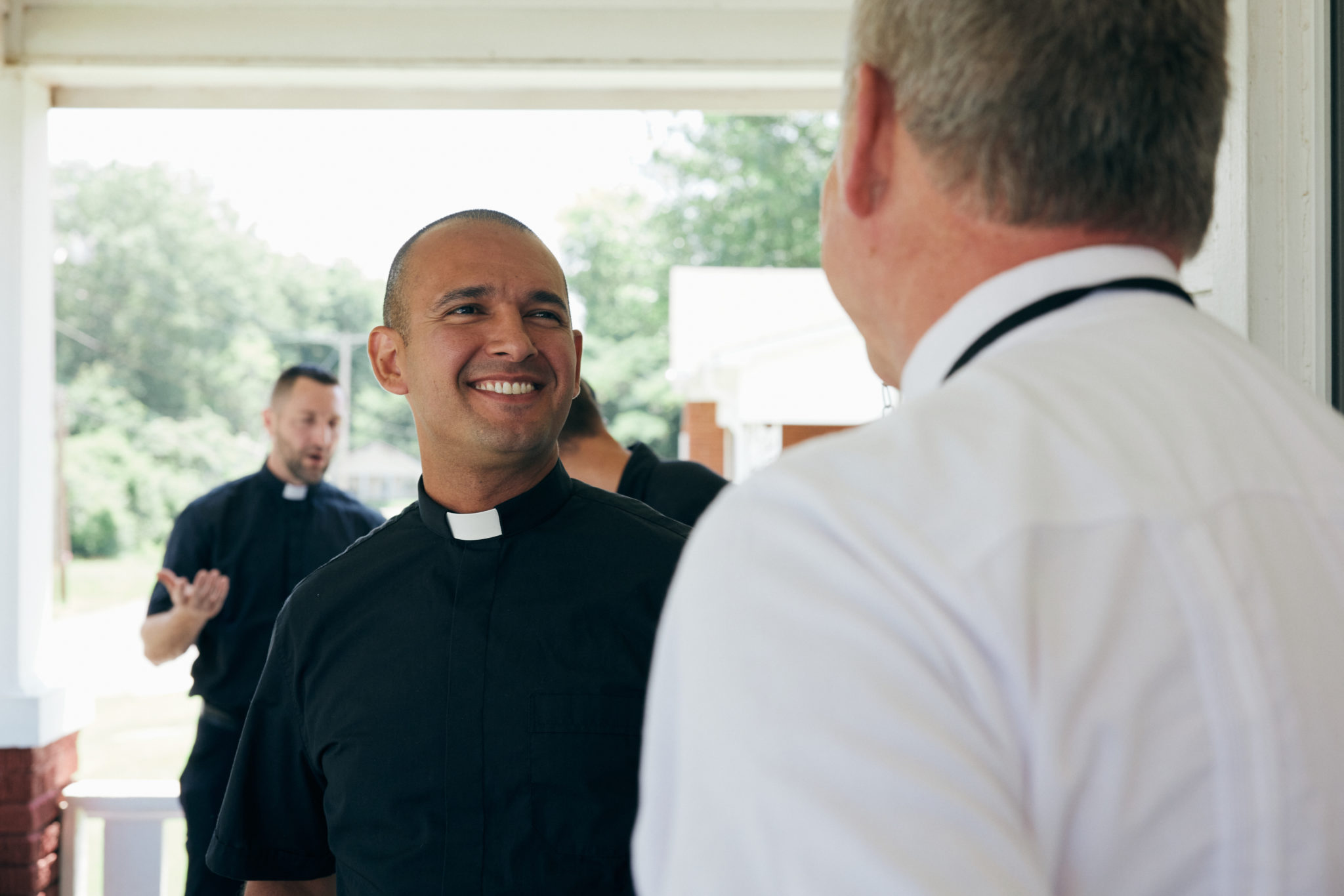
What is happening in Brooklyn is happening across the country. To date, 525 pastors from 85 dioceses have participated in immersion trips. Among them is Father Gabriel Curtis, administrator of St. Catherine of Siena Parish in Hillside, New Jersey. Father Curtis has traveled with Catholic Extension Society twice, including a trip to Puerto Rico.
While in Puerto Rico, Father Curtis visited schools and churches that were still recovering from the devastating earthquakes in January 2020 and Hurricane Fiona in 2022.
From the remote hillside chapels to the proud Cathedral of San Juan Bautista, Father Curtis witnessed the islands’ proudest treasure: the indomitable, faith-filled spirit of the Puerto Rican people.
The immersion experience lives on in his parish. For example, every Christmas Eve parishioners place envelopes in baby Jesus’ manger for support of Catholic Extension ministries, and the parish supports Catholic ministry to impoverished children in Arecibo, Puerto Rico. The connection to the impoverished baby Jesus and the children of Puerto Rico is not lost on the parishioners.
This show of parish solidarity with others has helped create unity by allowing English, Hispanic and Portuguese cultures to come together and understand they are more alike than they imagined, which is, after all, their best gift to the baby Jesus.
All Saints Catholic Church in Houston is Texas big. Its 24 ministries and groups keep Father Eli López running. His immersion trip to Arkansas helped him experience another kind of “big”: the “big” of remote mission territories here in the United States.
Father López had always heard about the work of Catholic Extension Society, so he went to the Diocese of Little Rock, which encompasses the entire state of Arkansas, to see for himself. Father López said, “These immersion trips renew me. They help me step back from all my meetings and daily activities and enter into the pain and hope of others.”
An extra dimension to immersion trips, Father López added, is that pastors get to be with priests from around the country which renews the bonds of priestly fraternity that so often can get lost in the rush of parish ministry.
So, there is Texas big and Arkansas big. Both are held within the arms of the universal Church. Father Efraín Bautista is the pastor of Corpus Christi Catholic Church in Bonita, California. The parish’s name inspires the community to look beyond its boundaries to see the needs of the universal church. This is why Father Bautista traveled to Santa Fe, New Mexico, on his immersion trip.
“Among the things which struck me is the need to see the Church beyond the Diocese of San Diego,” he said. “It is, at times, easy for us to simply focus on our parish, diocese and region and not think about the broader Church. Immersion trips help me facilitate opening the eyes of others. To see that we are part of something greater.”
Father Bautista believes that an immersion trip is a great opportunity to see the wider Church, to more deeply understand who we are and what we belong to. The trips help him to see the diversity which makes the “Corpus Christi,” the Body of Christ, his parish’s namesake, so beautiful.
It is no surprise that by “immersing” themselves with the poor and those who work with the poor, bishops and pastors renew their spirits. It is a way of spending time with Jesus. Matthew 25 proclaims that when we stand with the poor, the hungry, the stranger, the imprisoned, we stand with Him. By going to the margins, we rediscover what is essential and renew our hearts for ministry.
Building Faith Communities
One Monday around 4 a.m., Father Fredy Angel awoke to a loud sound in the rectory. The air conditioning unit had collapsed, crashing through the old roof and landing next to his bed.
Read more of his story
Immediately, parishioners of Holy Trinity Church in Swainsboro, Georgia, helped their beloved pastor, Father Angel. He had arrived in town two summers before. During that time, this small Catholic mission in southern Georgia has grown from 55 parishioners to 200, representing a substantial increase in a region where Catholics make up less than 3 percent of the population.
But this is nothing new for Father Angel, Catholic Extension Society’s 2015-2016 Lumen Christi Award recipient. He has been building the Church, both with bricks and people, throughout his 18 years as a priest for the Diocese of Savannah, Georgia.
Father Fredy is once again doing this at his latest assignment. Today, Catholic Extension Society supports his ministry at Holy Trinity and at Holy Family Catholic Church in Metter, Georgia, 30 miles south of Swainsboro.
Under Father Angel’s leadership, these parishes aspire to build up the Church. His track record suggests that together these faith communities are destined for great things.
On May 21, 2016, the parish community of St. Anthony of Padua Catholic Church in Ray City, Georgia, saw a long-held dream come true with the dedication of its new church building, pictured below. Father Angel used the monetary award from the Lumen Christi Award to spearhead the construction of the new Church. For the previous eight years, Father Angel has pastored three mission churches that spanned three counties in Georgia, serving a multicultural parish.
After its completion, Father Angel united the three churches into one diverse community of African American, white, Hispanic, and Asian American parishioners. Father Angel told parishioners at the dedication Mass, “The easy part is done. We already built the structure. Now we need to build the soul.”
Now in Swainsboro, Father Angel is seeking the same unifying transformation he witnessed in Ray City. Holy Trinity is a predominantly Hispanic parish in a town where Hispanics make up less than 4 percent of the population, and Catholics are an even smaller percentage. He said, “It doesn’t matter the race, the nationality, or whatever. … It’s about the inclusion.”
He continued, “For me, building the Church is to recognize each other as one.”
His parishioners in Swainsboro tackled their first project. They repaired the collapsed roof and made improvements to the rectory in just five months. Now they’re making progress on multiple projects at the Church to accommodate their growing community.
Since January 2023, Holy Trinity parishioners have come to work every Saturday from 7 a.m. to 4 p.m.
They have successfully expanded the Church by eight feet on both sides to add more seating, as seen below. Now they are in the final months of work on a new parish hall.
These renovation and expansion projects were estimated to cost $1 million—far exceeding the parish’s financial means. Yet Father Angel said he was able to do it all for just the cost of materials, thanks to the commitment of his parishioners to their Church and its growth. They waited 20 years for these changes.
“It’s just amazing when the community works together. When we are motivated, it really works.”
The entire community is taking notice of the new developments at Holy Trinity. This makes the Catholics in Swainsboro, despite being a religious minority in the region, proud to identify as Catholic. That fills Father Angel with great joy, saying, “We have already been in two newspapers. People are talking about what we are doing here. It makes people proud to say, ‘I’m from the Catholic Church!”
Father Fredy Angel, a Church builder in every way, draws inspiration from St. Francis of Assisi.
“Building Church comes with the spirit of St. Francis. God called him and said, ‘Just build my Church,'” Father Angel explained.
“We don’t build a community just with bricks and stones, but with a community united in faith.”

Navajo grandmothers are crying out to preserve their culture and faith
New Extension initiative helps Native communities pass on Catholicism, preserve indigenous language and share sacred traditions.
Read more of this story
Think about your favorite song as a child. Where did it come from? Who sang it? Did it bring you comfort or joy, or a sense of the sacred? If you have children or grandchildren of your own, chances are you have sung that same cherished and sacred song for them.
Now, imagine your children have grown up and forgotten the song. And their cousins, friends and their own sons and daughters don’t remember it either. The song has been passed down for generations, but it’s at risk of being lost forever.
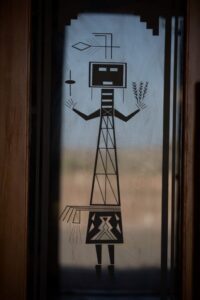
It’s a heartbreaking thought. For Navajo grandparents, it’s a very real fear. And it’s not just a song that they fear will be lost. It’s their language, stories, culture and Catholic faith—such as this artwork depicted in Our Lady of Fatima Catholic Church in Navajo Nation—which are all in danger of disappearing.
Catholic Extension Society recently created a program to help parents and grandparents pass on their faith and sacred traditions to their children. A large portion of the participating parishes come from various Native communities supported by Catholic Extension Society throughout the country.
St. Pope John Paul II often spoke on the reciprocal relationship between faith and culture: “The incarnation of the Word was also a cultural incarnation,” he said in a 1982 speech to the University of Coimbra.
A couple years later he spoke at a gathering of Indigenous peoples and Inuit at the National Shrine of Saint Anne de Beaupré in Quebec, a centuries-old place of worship and pilgrimage in North America. He said, “During Her long history, the Church Herself has been constantly enriched by the new traditions which are added to Her life and legacy. And today we are grateful for the part that the Native peoples play.”
Catholic Extension Society’s new program brings families and Church leaders together to discuss what they treasure most in their faith and cultural traditions, and how they might find new ways to share these gifts with their children and grandchildren. After this community-wide discussion, participants make a concrete plan and act on it with our financial support.
Listen and learn
One such listening session occurred in May at Our Lady of the Blessed Sacrament in Fort Defiance, Arizona, located on the Navajo Nation.
It gathered parents, catechetical leaders and Native elders in the community, along with Brother Maynard Shurley, a homegrown Navajo Franciscan friar and Catholic leader.
Following Sunday Mass, over 50 people filed into the parish hall. They arrived prepared to answer questions including “What are your challenges when it comes to passing on the Catholic faith to your children?” and “What wisdom of the cultures do you feel needs to be passed on?”
Urgent call from elders
The meeting was emotional, but fruitful. Elders, who are revered in Navajo culture, were particularly concerned with youth not learning their songs, stories, language and culture—all of which are vehicles for passing on the Catholic faith.
One grandmother, Arlene Hickman, tearfully shared her worries:
“I used to always think, what’s going to happen? What’s going to become of this?”
Another woman passionately stated:
“We have to keep this going! We can’t let it die out! It’s very important. Like they said, our tradition, we have to hang on to it. The songs that we sing, we are blessed to be singing those songs.”
Other members shared broader community struggles that make it difficult to connect their children with the Church, such as lack of transportation and few healthy activities for youth, leading to detention, drug use and other distractions.
“We need help,” said another grandmother, Helena “Linda” Yazzie. Her husband, Leonard Yazzie, a 20-year military veteran, passionately shared his own experience in raising his children. He emphasized the importance of sharing stories with them.
He said that when he was young, he decided to become Catholic when he first experienced a priest saying Mass in Navajo:
“That really just did something to my being. The way he said the Mass, everything was Navajo. I was sold.”
“And that’s when I decided that I was going to the Catholic church,” he continued. “And to this day I’m Catholic.”
He taught his children about the Catholic faith and Navajo culture at the same time, by telling nighttime stories, especially during camping trips. His children, who continue to attend church, tell him they still remember those stories and thank him for the way he raised them.
“It’s what we need to do as parents. Get involved. Tell them stories. Do things with them and tell your stories while you do that. Tell them about the lay of the land, the flowers, the trees, how we interact. That’s our culture—how to pray, what to say. When you’re looking at the night sky, tell them about the stars … my grandpa taught me that.”
Creating an action plan
Following the listening session, parish leaders worked with families to come up with a three-year plan to pass on their faith and culture to the next generation. The new program aims to uplift entire families, enabling elders and parents to celebrate and embrace their faith and culture alongside the youth.
Catholic Extension Society will support exciting new events and programming to be part of a community-endorsed action plan for the parish, which includes the following:
- Elder storytelling and prayer nights
- Navajo rosary nights that coincide with the liturgical seasons
- Navajo choir concerts
- Family game nights
- Monthly grief support meetings
- Bible study and retreats for parents
- Healthy living seminars
- Incorporating more Native traditions in Mass, including wearing moccasins
Moccasins, a footwear made of deer hide, is a particularly special tradition.
“If we do wear our moccasins, we are closer to Mother Earth,” explained Victoria Begay, a Navajo Catholic parishioner. “[There is] no other barrier, no plastic, no metal.”
Catholic Extension Society is honored and deeply moved by this Navajo Catholic faith community’s response to the program.
During the listening session, one elder shared a few phrases in Navajo that captured the spirit of how they are moving forward, together: “Relationship. We need to say hello. We need to have each other.
The program is allowing this community to embrace their deepest truth: that as Navajo people, they are beloved sons and daughters of God. What’s more, God has spoken to their hearts through their unique language and culture.
As a reminder of this truth, parishioners at Our Lady of the Blessed Sacrament Church only need to look to their statue of Mary and Jesus appearing as Navajo mother and child.
As this program helps families embrace both the gift of faith as well as the gift of their Navajo identity, we hope that Navajo grandmothers will no longer shed tears of despair about the future. Rather, there will be tears of joy as they watch their families embrace God’s divine love made available to them in their Native tongue and sacred traditions.
A New Wave in Little Rock
Something is going on in the Diocese of Little Rock, Arkansas, something that should give us hope for the future of Catholicism.
Read more of this story
Vocations to the priesthood have skyrocketed. In the past 15 years, 51 men have been ordained. Twenty-five more are in the seminary. During these 15 years, the median age of priests has fallen from 65 to an amazing 49 years old.
“Here in Arkansas, we’ve promoted vocations across the board in the life of the Church and created a culture of vocations in our parishes, in our youth programs, in our schools,” said Bishop Anthony Taylor of the Diocese of Little Rock. “And our young men have responded.”
To grasp the magnitude of these numbers, the nation’s largest archdioceses, which serve millions of Catholics, would have to ordain more than 1,000 priests in the same 15-year period to keep pace with the Diocese of Little Rock. No diocese in the nation has exceeded 200 ordinations in that time frame, according to the Official Catholic Directory.
Little Rock, a statewide diocese, was founded on the same day as the Archdiocese of Chicago and Milwaukee. Yet, Catholics still make up only 5 percent of the total population. The number of vocations is not just what’s impressive. The strength of those ordained is what’s most powerful.
Fathers Stephen Hart, Mauricio Carrasco, Stephen Gadberry, and seminarian Chase Feltner are among those who have come through the ranks in the past 15 years. They have a lot in common. They are intelligent, fit, focused, affable, articulate, and easy to be around. They are, for lack of a better term, joyful.
Father Hart has been a priest for five years and has served growing faith communities across the state of Arkansas, such as Holy Spirit Catholic Church.
He currently covers two parishes. He talks with such enthusiasm about his faith communities that one gets the impression he could handle many more. He doesn’t complain about the mileage, but instead focuses on how hungry his people are for the Gospel and how great the harvest is. They are his fuel.
Father Carrasco is the older man of the group. He has been ordained for 11 years and covers four parishes.
He talks about the “holy inclusivity” of his parishes, where diversity is a treasure. This is just not lip service—it’s his playbook.
It’s also the playbook of the Little Rock diocese. All seminarians and priests are required to learn Spanish so they can better serve the growing Hispanic population that is coming to the area for jobs in agriculture, logging, meatpacking, and many other labor-intensive industries. This inclusivity—where not only are all welcome, but all feel at home in the Church—is revitalizing the diocese. Five new parishes have been started in the past 15 years.
Father Gadberry is a ninja warrior. That is no metaphor. He appeared on the TV show “American Ninja Warrior” in 2018 and 2020, wearing his clergy shirt and Roman collar as he traversed the obstacles in front of a national audience. Now he trains in his home gym.
When he was introduced at his first parish, Father Gadberry walked down the central aisle on his hands. The ushers and altar servers were mightily impressed. His priestly ministry makes him feel most alive. God is truly present beneath, between and beyond him.
Chase Feltner, a seminarian, is also a cross-country and track and field star. In fact, he (along with his dad) is in the Arkansas Track and Field Hall of Fame, so “Chase” is the perfect name for him.
His family runs Feltner Brothers, a well-known and loved hamburger restaurant in Fayetteville, Arkansas. Feltner was all set to “run” and grow the family business, but something nagged at him. For seven years, he struggled to know where he was being called. The notion of becoming a priest stayed with him and would not go away. He says that eventually the Lord outran him. Now he is in the seminary, trying to figure out what course the Lord has set for him.
The vocations of all these men are contagious. Their camaraderie is deeply moving. One wants to be with them on their journey. They are living proof that the best recruitment strategy for new vocations to the priesthood is to have happy priests, priests who are in love with their ministry, priests who exude the infallible joy of God’s presence.
These priests will be followed by more. Presently, the diocese has 25 seminarians. Catholic Extension Society has proudly supported these priests and seminarians over the years, as well as the missions and churches where they came of age. More young people—whose pulses quicken when they hear the Gospel, whose hearts burn within them when they follow Jesus, whose souls yearn for the adventure of priesthood—will follow.
It turns out that the explosion of vocations in the Diocese of Little Rock is due to young people coming to understand St. Ignatius’ idea that God is surely found in “that which makes you feel the most alive.” In other words, happiness and following God’s will are not mutually exclusive.
Hope and Refuge for Castaway Children
When Sapphire, at 10 years old, showed up at an unassuming house on a quiet street in Grand Island, Nebraska, she didn’t expect to stay for long. She had already lived in 10 foster homes and two failed adoptive homes.
Read more of this story
She was malnourished and could not communicate well due to a deformity in her jaw that made it difficult for her to speak and chew food.
As Sister Catherine Nagl opened the door and welcomed her in, she found a stable and peaceful environment that she had never experienced before. Originally, Sapphire was only supposed to come on weekends as a “respite” child, to give her current caregivers a break. But after six months, she moved in permanently.
Sister Catherine brought in a speech therapist to help Sapphire learn how to speak and eat according to the shape of her mouth. Sapphire began to talk and grew rapidly.
“Of course, she’s been a social butterfly ever since,” Sister Catherine said.
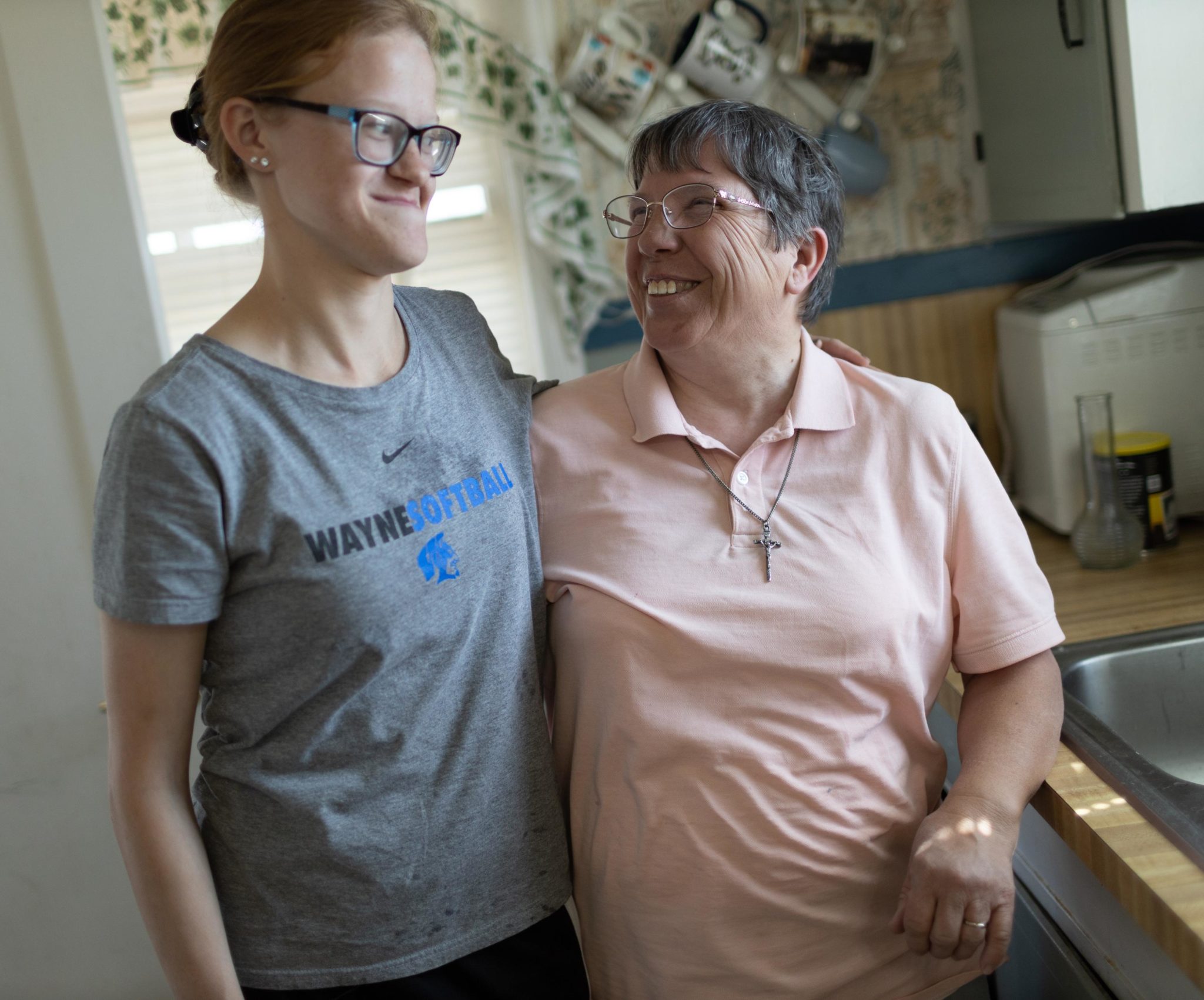
Now, as a young adult, Sapphire shares a special bond with the sister who took her in permanently.
Sapphire’s story proves how Sister Catherine’s care and love can truly transform children. Her ministry is called the Family of the Good Shepherd. Since 2010, she has cared for more than 50 children, many of whom were considered too challenging to be housed by other caretakers. She takes in short- and long-term foster children and helps them understand their worth.
From a young age, Sister Catherine always knew she wanted to help children, especially those who require special care and attention. As a child, she, too, was counted out.
She was born premature, and her parents were told that their daughter would never be able to breathe on her own. They dedicated the feeble child to the Blessed Mother, and a few days later, she went home without an oxygen mask.
Sister Catherine now seeks to bring about miracles for children who are considered “impossible cases,” just as she was once thought to be.
She joined the Sisters of the Society of Our Lady of the Most Holy Trinity. She served as a teacher and coordinator of residential services at a Christian home for pregnant teens and teenage mothers. The call to serve children grew stronger still.
With the permission of her religious community, she returned to Nebraska to establish her new ministry, which aimed to help foster children. She also aspires to form a new religious community, the Daughters of Mary, Mother of Jesus the Good Shepherd, to expand ministries to children.
Sister Catherine is still the guardian of Sapphire, who is now a young adult. Sapphire graduated from a Catholic boarding school for children with special needs, where she thrived, and now helps care for the other children at the house.
Among the other children are Eleyna, a seventh-grade girl, and Micah, a sixth-grade boy. They love playing with the family dog, Rosie.
Sister Catherine also gives special attention and love to a very medically fragile toddler currently living in the home.
The children Sister Catherine takes in often struggle to manage their emotions. She says children who grew up in abusive homes see the world very differently. They are survivors and react strongly. “They have traumas that trigger each other’s traumas,” she said.
Sister Catherine teaches them forgiveness and helps them understand their emotions so they don’t let them get the better of them.
“We work on healing emotionally, spiritually, and physically, if that’s needed,” she said. “We learn how to have a healthy sense of pride.”
She continued, “We learn how to value ourselves and the others around us.”
Sister Catherine has established firm household rules that help the children form healthy habits and a positive outlook on life.
“I very quickly get them into the routine of the household. Everybody has household chores,” she said.
While introducing them to structure, her highest priority is for them to find joy and security. “Children should be happy,” she said. “It’s the carefree time of life.”
She encourages the children to pursue their passions. Eleyna possesses talents in cross-stitching and gymnastics.
Micah loves sports, such as soccer and basketball.
Some families just need her to take temporary care of children with special needs or who are more challenging. She will take them in often at the drop of a hat. “My name gets out,” she said.
She prepares many children to live with adoptive families. She loves to see them “blossom” in their new environments.
She helped one family adopt four siblings. “I had to teach them how to be siblings in a non-abusive environment, where they didn’t have to live and survive the way they had been, where they could treat each other with respect,” she said. The children’s new parents said they never would have been able to take in all four siblings without Sister Catherine’s care and guidance.
Sister Catherine sees the face of Christ in each child she cares for. Her patience, thoughtful attention and ever-present smile tell the children that they are important and loved.
Critical Response in Puerto Rico
In 2017 Hurricane Maria led to the deaths of 3,000 people in Puerto Rico, shut down the power grid for six months and caused at least $100 billion in damages to 300,000 homes and hundreds of Catholic church properties, some of which are centuries old.
Read more of this story
Bishop Alberto Figueroa Morales, who now leads the Diocese of Arecibo, Puerto Rico, remembers being in the rectory basement at his former parish where he served as a priest in the Archdiocese of San Juan when Hurricane Maria made landfall. His mother was with him, and they hid in the bathroom, fearing the winds would knock out the windows and everything else. When the skies calmed, it was morning again.
Bishop Figueroa Morales recalls emerging from his place of shelter to survey the wreckage.
“The first thing I heard was from the people we have living near the parish. One lady was telling another, ‘¡María, estamos vivos!’ (‘María, we are alive!’). And the other answered her, ‘Yes, we are alive!'”
The U.S. federal government was slow in its response, but the Catholic dioceses on the island were not. Neither was Catholic Extension Society. The moment bishops regained communication capabilities, their first call was to the Catholic Extension Society. “Help us,” they pleaded.
Catholic Extension Society was the first organization to wire money to Puerto Rico, allowing the Church on the island to respond immediately to the pastoral and humanitarian needs unfolding in its midst.
Three months later, an unexpected policy change, prompted by a U.S. Supreme Court decision, led to a new opportunity for houses of worship to receive rebuilding funds from the federal government. The only catch was that churches had to act quickly to stake their claim, and they needed seed money to organize their recovery claims.
Knowing that time was of the essence and that dioceses were still—literally and figuratively—operating in the dark, Catholic Extension Society stepped up in early 2018 and organized an island-wide initiative.
Within six weeks, we helped the Church meet the application deadline. Hundreds of applications were submitted. This provided access to hundreds of millions of dollars in federal aid to rebuild churches and schools. Next, in early 2019, the Catholic Extension Society assembled a full-scale recovery team, utilizing the support of leading experts to guide all dioceses down the long and complex road to accessing and using recovery funds.
In January 2020, Puerto Rico was struck by a series of catastrophic earthquakes, which toppled buildings like Immaculate Conception Parish in Guayanilla.
Thankfully, communities immediately benefited from the capable support of our on-island recovery team, which helped them access federal funding to rebuild their felled schools and churches.
The six dioceses of Puerto Rico operate with very few financial resources as they serve a population where nearly half the people live in poverty.
“I have friends in the States, and they send me help sometimes because they know the situation of the Church in Puerto Rico,” said Bishop Figueroa Morales.
He continued, “Sometimes they send me what a parish [in the United States] receives in a weekend collection. I don’t think that any church collection in Puerto Rico has a quarter of that or half of that in a year.”
The disaster-struck dioceses could not have afforded the upfront cost needed to provide damage assessments without Catholic Extension Society’s coordination of disaster experts and initial financial backing. Catholic Extension Society provided $18 million to cover the upfront management costs, most of which will ultimately be reimbursed by the Federal Emergency Management Agency (FEMA). This capital has been a lifeline, ensuring the dioceses could pursue all the federal funding available to them.
Five of the six Puerto Rican dioceses are participating in the recovery program.
Thanks to this upfront work and financing, the Catholic Church in Puerto Rico is now positioned to receive an estimated $400 million in funding to rebuild more than 600 damaged facilities, including historical, centuries-old Catholic churches, schools, and mission chapels serving the island’s most remote communities.
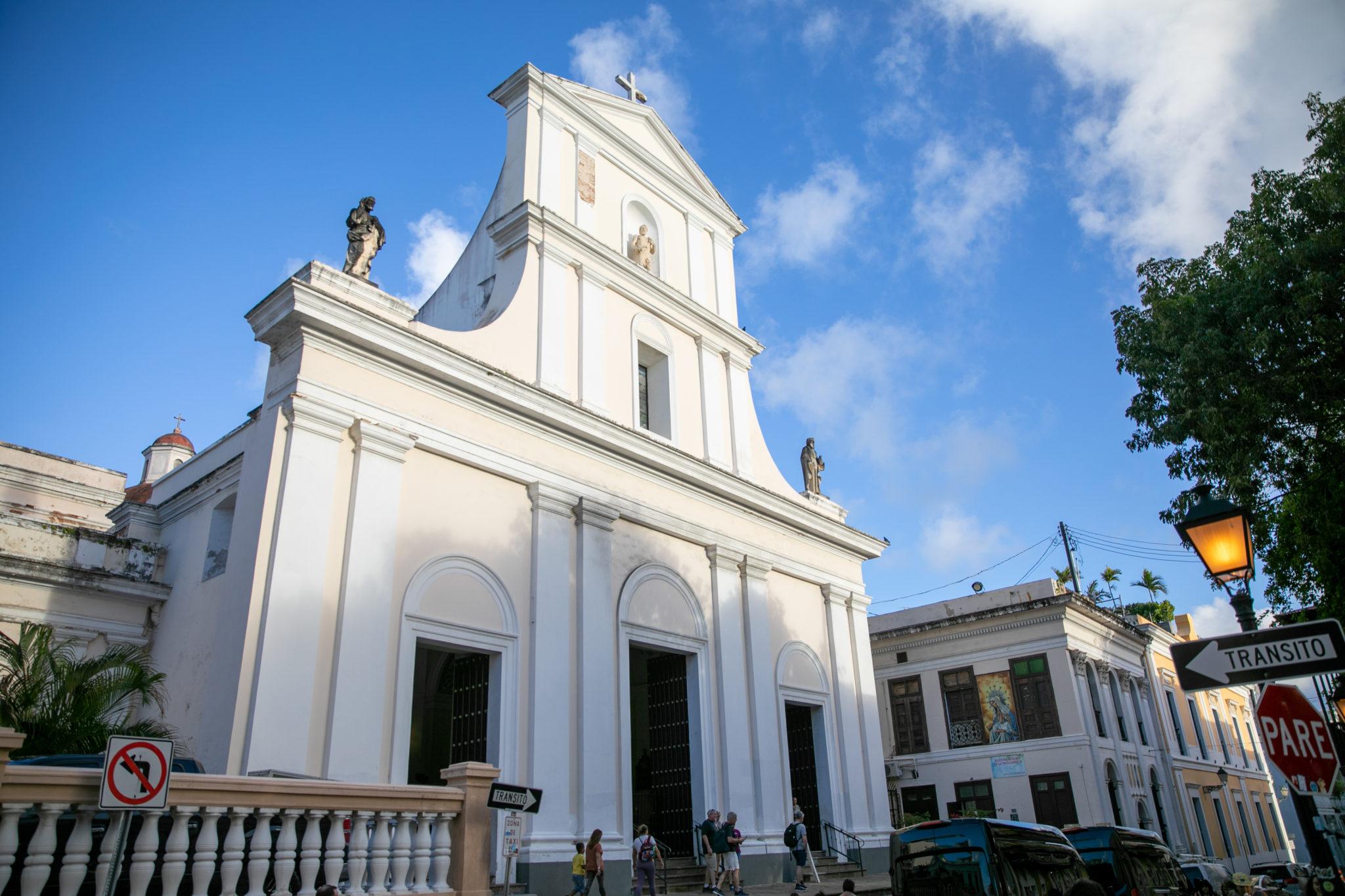
One of these churches is San Jose Church in Old San Juan. It endured significant damage. It is the second-oldest Church in the Americas.
Each provides so much hope, care, and charity to the people of Puerto Rico.
Archbishop Roberto González Nieves of the Archdiocese of San Juan said, “Every family needs a home, needs a place, needs a structure, needs a building to gather, to celebrate, and to pray.”
“When a place is destroyed, one needs to rebuild and begin again. As a Church within a sacred place that beckons us to a more contemplative appreciation of life and a more spiritual undertaking in our daily living,” he added. “We come together to help one another in that spirit of resiliency and hope in the face of tragedy.”
To date, $328 million of the estimated $400 million has been “bligated” (that is, awarded) by the federal government to the Puerto Rican dioceses, thanks to immense and tedious work funded by Catholic Extension Society. The Church in Puerto Rico can now begin the long-awaited reparation of facilities and continue its vital mission.
Catholic Extension Society’s recovery team also secured an additional $43 million in a competitive grant program, which will enable Catholic schools to receive “hazard mitigation funding.” This grant will allow these structures to be rebuilt more resiliently and in an eco-friendly manner, serving as safe shelters during future disasters and ultimately saving lives.
In 2022, the Catholic Extension Society formed a steering committee among the Puerto Rican bishops to coordinate the rebuilding process across all dioceses of Puerto Rico. Recently, the bishops issued a request for proposals (RFP) to find a construction management firm that will help ensure the timely, cost-effective, and FEMA-compliant rebuilding of church facilities across the island.
Many reputable firms possessing both the expertise and manpower have submitted bids to work with the Church. Construction projects to rebuild damaged facilities are expected to begin in the coming year.
The bishops’ steering committee also authorized a strategic plan that examines how to utilize FEMA funds best to rebuild appropriately sized Catholic schools in key locations, thereby educating the children of the island, including the poorest of the poor.
The progress we have made in Puerto Rico to date gives us hope. This ambitious project will not only restore the Church but reconstruct churches of all types and locations, from the most remote mission chapel in the mountains to the Cathedral of San Juan Bautista—one of the oldest Catholic churches under the American flag.
This project will also create jobs and provide an economic stimulus to towns across the island that have suffered through a years-long downturn. Indeed, it promises to have a generational impact on the island.
We are not in this project alone. In addition to the Catholic Extension Society’s financial and coordination work, we rely on the support of our major funding partners, who contribute to various aspects of this program.
There is no precedent or prior example in the history of Christianity in America for a project of this immense size and scale.
Catholic Extension Society was able to emerge as the pivotal organization in this recovery for two main reasons.
The first is that the Catholic Extension Society has supported Puerto Rico for over 115 years, dating back to its earliest years as a U.S. territory.
The second is that the Catholic Extension Society has always maintained a trusting and collaborative relationship with the Catholic leaders of Puerto Rico. This confidence helps move this complex project forward, even when we encounter challenges.
Catholic Extension Society makes routine trips to Puerto Rico, such as when our president, Father Jack Wall, and chancellor, Cardinal Blase Cupich, visited a damaged school in Vega Baja.
“I have been in parishes in the countryside. I have been in parishes in the cities. Catholic Extension Society was always present,” Bishop Figueroa Morales said.
With the expertise of our recovery and construction partners as well as the perseverance of our dioceses, bishops, pastors, and all the faithful, we know that the Puerto Rican Church will one day rise again.
A Brave Nun’s Honorary Degree
A graduate of one of Catholic Extension Society’s most innovative programs received a prestigious honor this May: an honorary doctorate from Boston College. The university recognized her selfless and courageous efforts to illuminate God’s love in the dangerous cartel-controlled towns in the northern Mexican state of Chihuahua.
Read more of her story
Sister María Teresa “Tere” de Loera López, a member of the Catholic Teachers of the Sacred Heart of Jesus, is one of 150 sisters who are a part of our U.S.-Latin American Sisters Exchange Program.
This program invites Catholic sisters from religious congregations founded and based in Latin America to pursue a university degree as they create new ministries in Extension dioceses among the poor.
Sister Tere was part of the first group of 36 sisters who came to the United States in 2014 and returned to their home countries in 2019.
When she returned to Mexico, she assumed leadership of a massive religious education program in the northern Mexican state of Chihuahua. Now she leads a staff of 12 as she oversees a religious education program that reaches 60 parishes.
“Each day I would drive for many hours through gang territories to coordinate children’s catechism in various parishes, passing drug houses and gunfire,” she said.
“This challenged me in a thousand ways to overcome my fears and focus on an important ministry—connecting with children and families and bringing the light of Christ into their lives, regardless of the difficult living situation many of them faced each day.”
She cares for the most vulnerable people in this dangerous region.
On receiving the doctorate, she said, “I feel blessed, grateful, surprised, and happy. I’ve always carried out my apostolate, giving my 100 percent for the love of the heart of Jesus, without expecting any reward other than to please Him by doing His will, guided by the charism of my congregation. This distinction that Boston College gives me is a great gift. I never imagined it.”
She graduated in 2019 with a master’s degree in Applied Leadership Studies from Boston College through the Catholic Extension Society’s program. “It was through the academic courses at Boston College that I was able to acquire the skills and tools to enhance my ministry,” she said.
While working toward her master’s degree, the Catholic Extension Society also funded her ministry in rural parishes of Arkansas, where she created religious education programs, served women who were survivors of domestic violence, and helped bridge Hispanic and Anglo families into a united community of faith.
“Catholic Extension Society has been making a path of support and accompaniment to the sisters,” she said. “They are always in communication, like angels, always willing to collaborate. All of this has been decisive in making known our belonging to Christ, our unconditional service in favor of society.”
She continued, “Catholic Extension Society is an inspiration, because it is always looking for ways to benefit the most vulnerable people in our society. Catholic Extension Society has been key in my path to receiving the doctorate.”
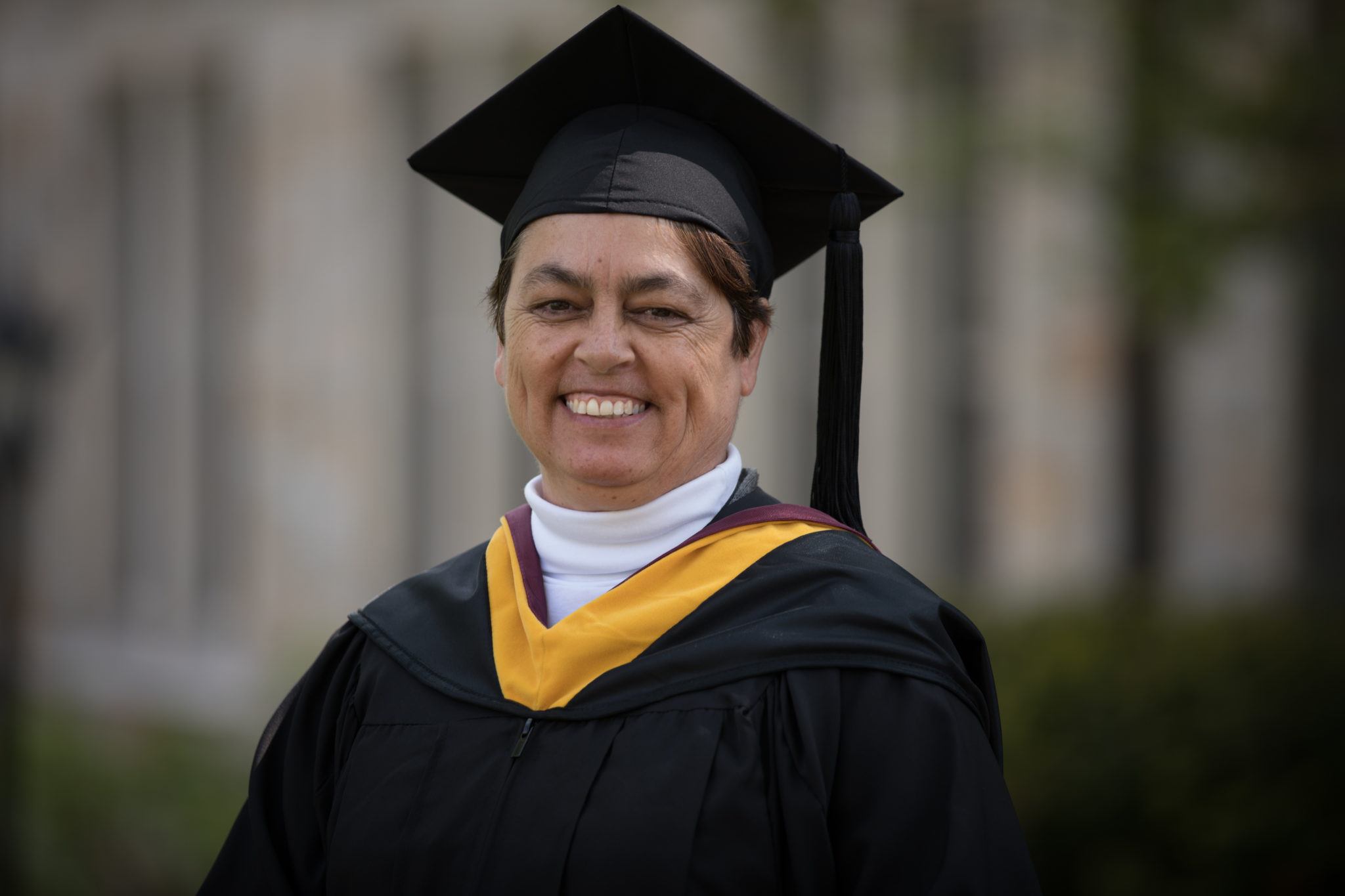
“For years, I have seen the vital work of Catholic Extension. Little parishes wouldn’t exist without Extension’s help. Allowing them to have Mass, even once a month, is so important.”
—Loren Schillinger